Your basket is currently empty!
Episode I: The Phantom License
So, let’s face it. A small record shop on a quiet West Sussex street, opposite an Iceland and a BetFred, doesn’t exactly scream “future world-class reissue label.” We’re not in Soho or Berlin, or some glossy glass-fronted office with an espresso bar in the corner. We’re across from cheap frozen peas and a betting slip counter.
And yet, somehow, it’s happening. From this unlikely base of operations, I’ve managed to reissue records that are not only selling out but getting stunning reviews across the board. People are writing about them, collectors are hunting them down, and for a brief moment it feels like Analogue October Records has snuck through the cracks and landed in the same conversations as labels with far bigger budgets and longer histories.
Of course, it almost didn’t happen.
The False Start (2019)
2019 was a strange year for me. By day, and most nights too, I was working flat-out in the film industry. I’d just wrapped back-to-back projects in Australia: Thor: Ragnarok and Godzilla vs Kong. On paper that sounds glamorous. The reality was long days scanning enormous sets and vehicles with LiDAR, lugging equipment around in the heat, then heading back to a beachfront apartment that looked idyllic in the brochure but wasn’t. No cocktails at sunset, no surfing before call time. Just work, sleep, repeat.

Still, in those quiet evenings, looking out over the sea, my mind would drift back to my little record shop in West Sussex. Could it be more than just a shop? Could I put something back into circulation, actually make a record rather than just selling them?
That’s when the first seed of Analogue October Records — THE RECORD LABEL — really took hold.
I decided to aim high, or at least sideways. My target was a gloriously obscure 1980s electronic/world music record. The kind of thing that would have fifty people around the world in ecstasy, and the other 7.9 billion scratching their heads. It felt like the perfect “statement of intent”: unusual, overlooked, and certainly not another reissue of something that already comes out every other year.
So I started the detective work: Who owns it? Where are the tapes? Who do I need to convince?
And then came the brutal realities.
First: the tapes. Or rather, what was left of them. When one of the band members pulled the PCM U-matic master out of its box, it had grown a luxurious coat of mould. You could almost hear the music crying out from underneath, trapped.
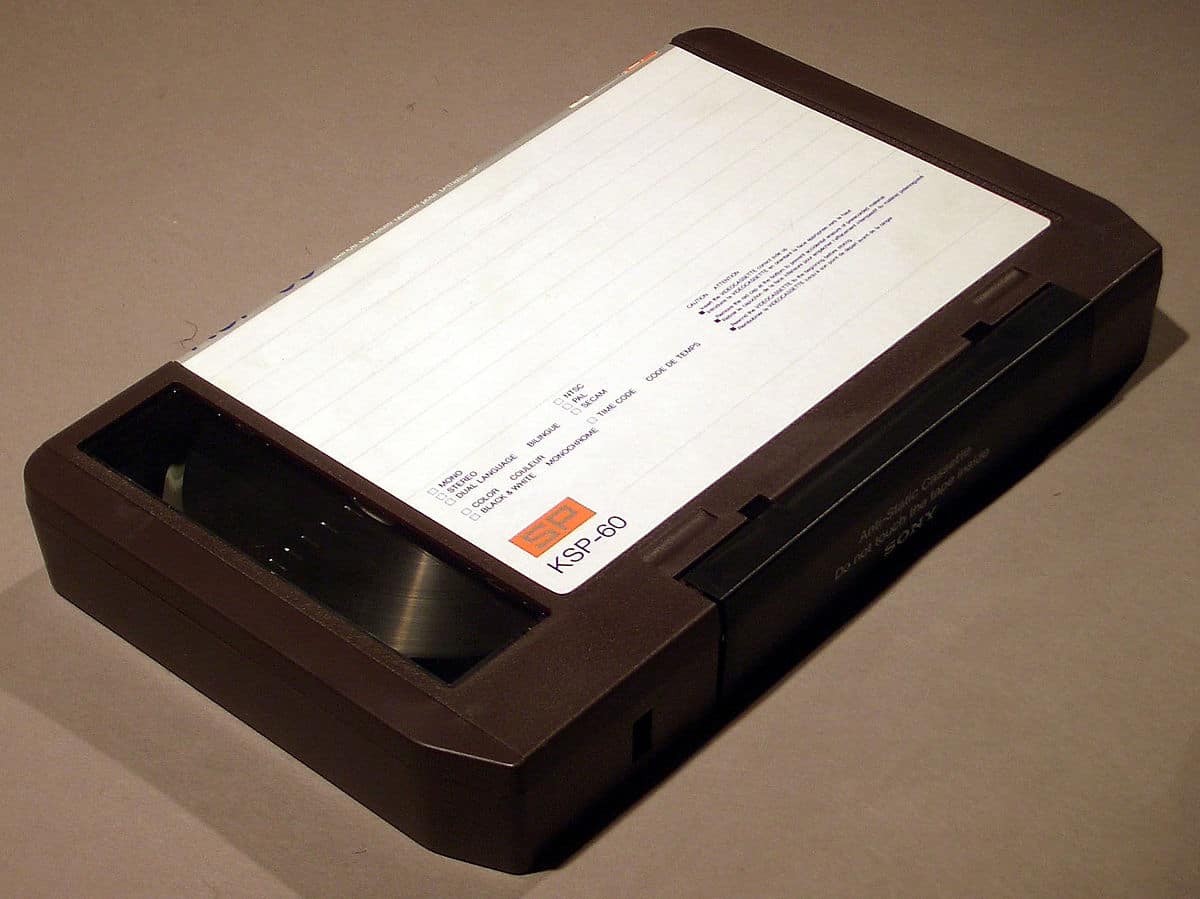
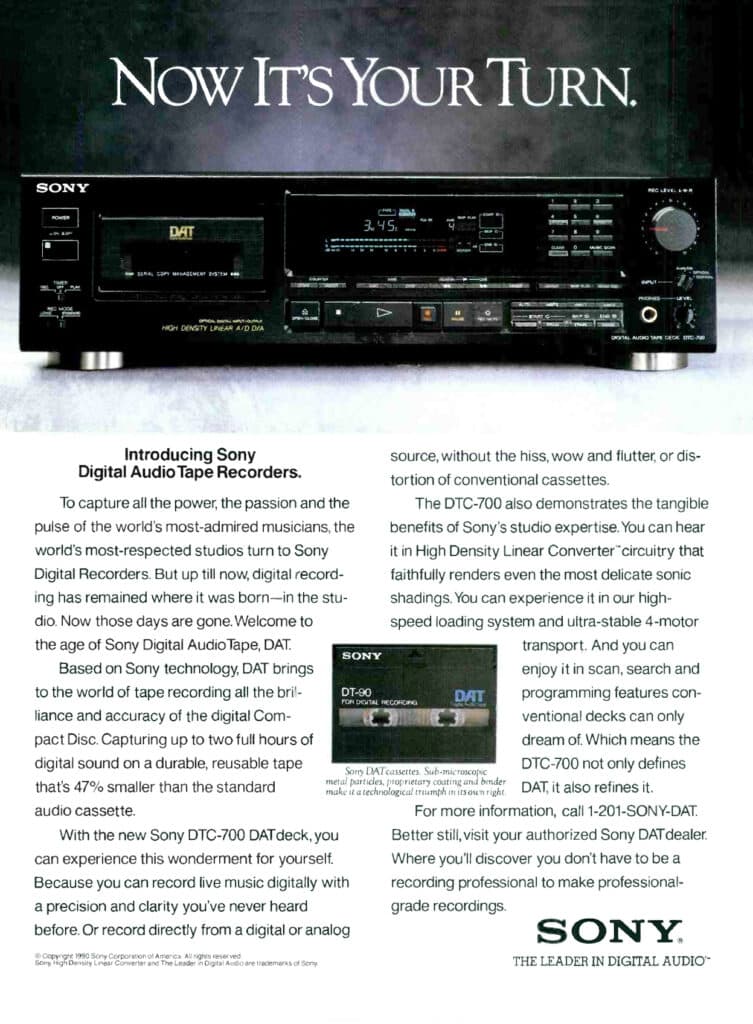
The fallback source was a DAT copy. At the time I thought: “That’s it then, game over.” The audiophile community has never been kind to digital formats, and back then I shared a bit of that prejudice. It felt like a poor substitute for the “holy grail” of original masters.
What I didn’t know then is that DAT can still be the backbone of a killer release. Most professional mastering suites keep Pro DAT decks in their arsenal. Miles at Abbey Road, for example, is famously proud of his. But those facts wouldn’t come to light for me until a few years later. In 2019, all I saw was mould on a tape and a faint hope of a digital backup.
Then came the second blow: the band. Not everyone was on the same page. Some were keen, some were indifferent, and one was openly sceptical. That member even accidentally cc’d me on an email calling me a rookie. Although, a recent revisit to this project for this article, I can see exactly what mistakes I made and how he arrived at that very fair conclusion.
So the whole thing fizzled. Months of emails, optimism, and late-night plans ended with a sigh and a quiet not now, maybe later.
Analogue October in Survival Mode (2020–2021)
Then, of course, the world changed.
By early 2020 the news was going from bad to worse daily. Within weeks the announcement came: we were ALL TOLD to stay indoors.
For a small record shop, it was devastating. No customers, no casual browsers, no Friday afternoon “what’s new in jazz this week?” chats. Just me, the racks, and silence.
Any dream of starting a label evaporated. This wasn’t about chasing obscure reissues anymore. This was about survival. Keeping the lights on. Keeping my sanity.
I leaned into online sales where I could, packing parcels in an empty shop, spinning records loud to fill the void. The floorboards shook, the shelves rattled, and I clung to the one thing I still had: the music itself.
But the label idea? Buried. To even think about it in those months felt ludicrous. Who would buy a reissue in the middle of all this chaos? The mission was simple: make it through.
A Flicker of Reissue Confidence (Mid – 2021)
Fast – forward to Mid 2021. Restrictions eased. People came back. Tentatively at first, then more confidently. The sound of the shop doorbell ringing after months of eerie silence was enough to make me emotional.
Customers flicked through racks again. Conversations about sleeve notes and pressing weights resumed. And most importantly: people were buying.
It was like oxygen flooding back into the room.
That small resurgence of confidence, that little window of optimism, was all I needed for the seed I’d planted back in 2019 to push through again. If not now, when?
This time I wanted to go back to my roots. Jazz. And not just any jazz: British jazz.
Why Reissue Courtney Pine?
In the mid-1980s, jazz wasn’t exactly storming the UK charts. It was niche, sometimes seen as academic or dated. And then came Courtney Pine. Young, bold, unapologetically British, and blowing his saxophone like a man possessed.
His debut album, Journey to the Urge Within, landed in 1986 on Island Records. For me, as a young listener then, it was electrifying. A door opening. It was my gateway drug into jazz: a record that said, this music isn’t stuck in smoky clubs in New York; it’s alive and happening right here in Britain.
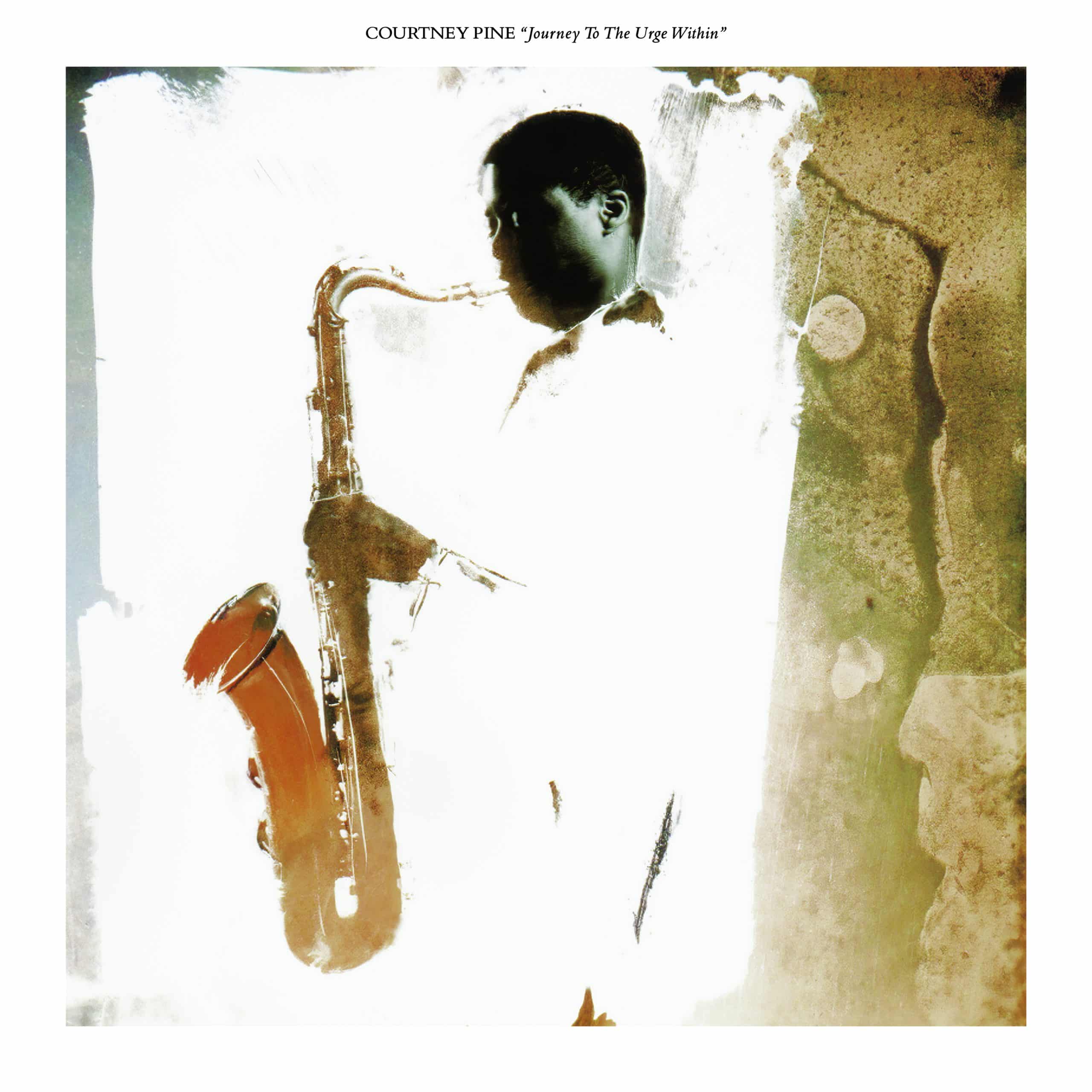
And yet, despite its significance, it had never been reissued on vinyl. Not once. Which is all the more surprising when you consider the way the majors have approached their own catalogues. Every year, without fail, the labels roll out diversity initiatives and curated campaigns for Black History Month. And every year, I would look for Journey to the Urge Within in that mix, because it would have been the perfect fit. But it was never there.
That always frustrated me. The UK Black music scene in the 1980s was vibrant and diverse. You had solid jazz musicians like Pine pushing boundaries. You had Brit-funk acts like Light of the World, Central Line, Freeez, Hi-Tension, Incognito, and Atmosfear taking jazz and funk into dancehalls and onto Top of the Pops. Even Imagination were tearing up the charts with hit after hit. And yet the majors, when they packaged up their heritage, tended to play it safe. It was Aswad and Steel Pulse, maybe a reggae compilation, and that was about it. Important music, yes, but hardly the whole picture.
To me, that vagueness, that lack of breadth, felt like it needed addressing. Courtney Pine’s debut wasn’t just a jazz album; it was a landmark moment in British cultural history. It deserved to be celebrated, not overlooked. And if the majors weren’t going to do it, maybe I could.
June 2021: The Email
So I sat down at the shop counter. Laptop open. Coffee cooling. Heart pounding.
I drafted an email to Universal Music, the biggest label of them all. I introduced myself: owner of a small record shop in West Sussex, passionate about vinyl, interested in licensing Journey to the Urge Within for reissue.
I read it. Re-read it. Deleted half of it. Re-wrote it. And finally, with a deep breath, I hit send.
What’s the worst they could say? It’s always going to be binary: yes or no.
Rookie Errors (and Gentlemen)
Here’s where enthusiasm got the better of me. Not long after sending the email, I thought: Why not also reach out to Courtney Pine directly? Surely if he was supportive, that would help grease the wheels.
So I did.
And here’s where I count myself incredibly lucky. Courtney Pine is, without exaggeration, an absolute saint. A true gentleman in every sense. He could have been annoyed, dismissive, or simply ignored me. Instead, he was warm, encouraging, and kind.
Meanwhile, Universal’s licensing team had already received my request. And instead of rolling their eyes at this rookie who had gone off-piste and contacted the artist, they showed patience personified. Calm, professional, and gently nudging me back onto the correct path.
Lesson learnt: enthusiasm is wonderful, but it needs to be channelled through the right channels.
The Shock
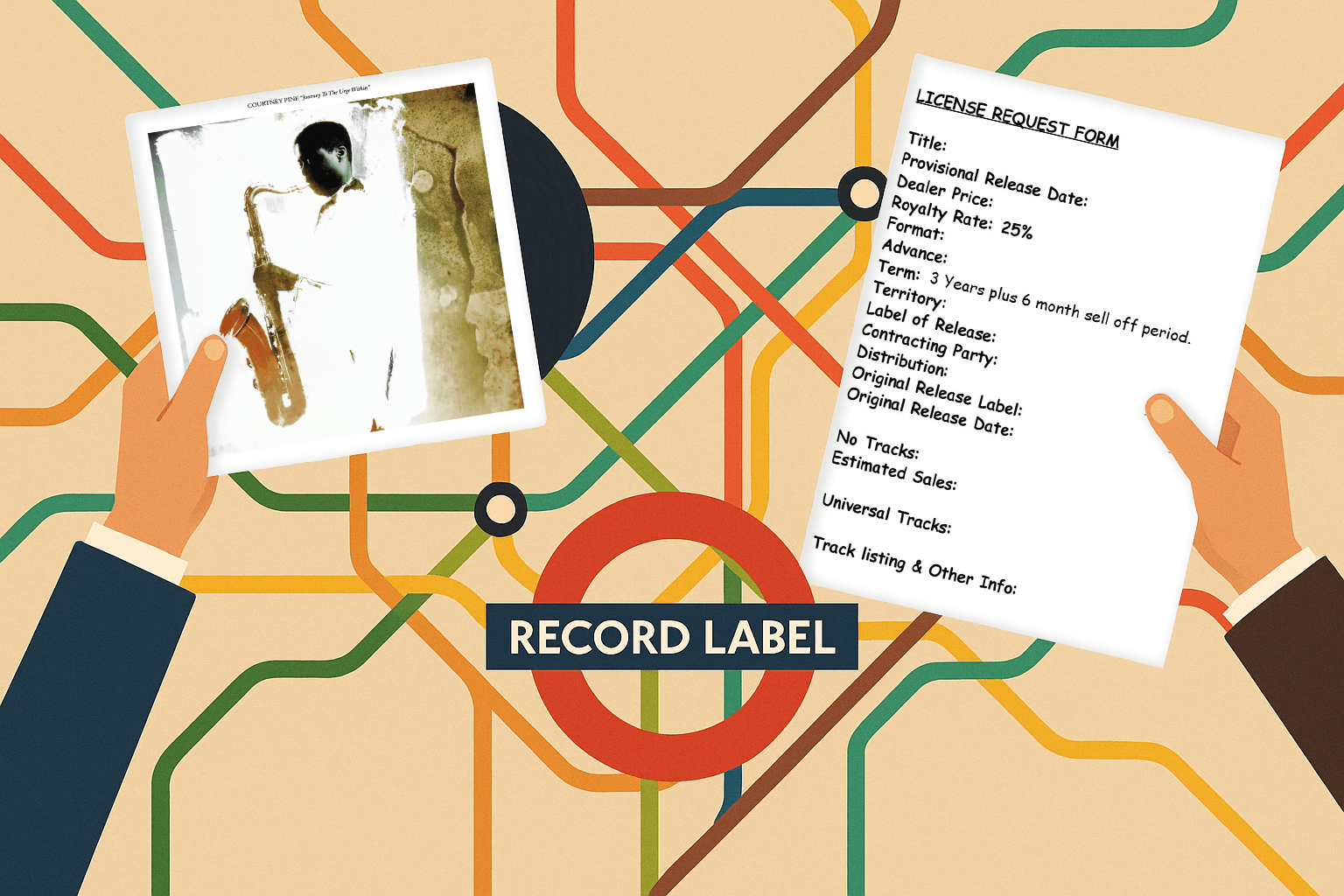
Then came the reply from Universal. Not a rejection. Not a polite brush-off. But an email with a PDF attached. A LICENSE REQUEST FORM.
Really? Could it be that simple? Fill out this form and away you go?
Well, no. If only. That form was the beginning of a long and complicated process. But the fact they’d sent it at all was monumental.
In that moment, Analogue October Records wasn’t just an idea or a dream. It was real. The label was born the instant that PDF hit my inbox.
Reflection: If I Can Do It…
Looking back, it still feels surreal. A little shop opposite Iceland and BetFred, not a swanky office. No A&R team, no investors, no industry clout. Just me, a passion for vinyl, and the nerve to ask.
Yes, running a record shop gave me a working knowledge of the system and maybe opened a couple of doors. But nothing I did is out of reach for someone else. It’s not reserved for insiders. If you’ve got the passion, the persistence, and the patience, you can take that shot too.
That’s why I’m writing this series…
So tell me, how do you license a record for reissue? For me, it started with mouldy tapes in 2019, a pandemic that forced me into survival mode, a jazz record that changed my life, and then almost two years after that false start, an email in June that changed everything.
Stay tuned for Episode II, where I’ll crack open that License Request Form and show you exactly what a major label asks for before they’ll even consider letting you near their catalogue. From there, we’ll move into Mastering, planning, royalties, artwork, distribution and so much more…
Spoiler: it’s not for the faint-hearted.
Comments are closed